





Human-Augmented AI Development: The Art of Not Surrendering to the Machine

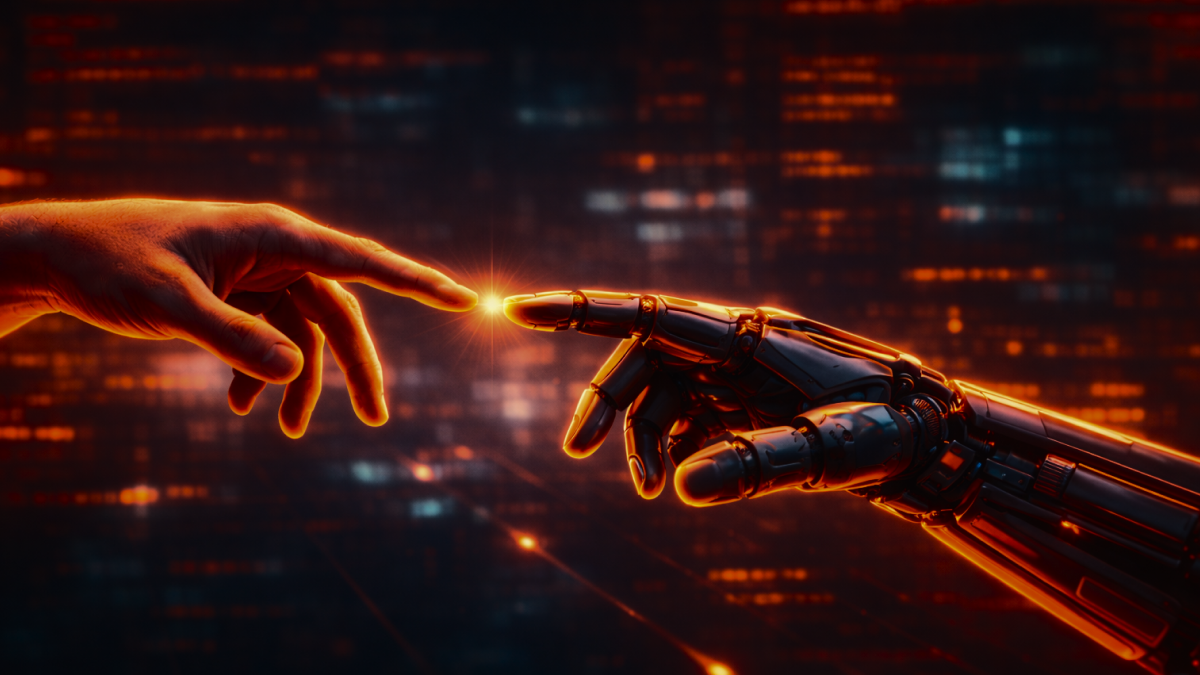
In Greek mythology, the centaur wasn't simply a horse with a human torso stuck on top. It was something more unsettling: a creature where the bestial and the rational coexisted without canceling each other out. Chiron, the wisest among them, taught medicine and music to Greek heroes. He wasn't human despite his equine nature, he was extraordinary precisely because of that fusion.
In 1997, Garry Kasparov lost to Deep Blue and the world declared the death of human chess. But Kasparov didn't retreat to sulk. The following year, he invented "Centaur Chess": humans and machines playing together against other teams of humans and machines. And here's where it gets interesting, in an open tournament in 2005, something happened that no one expected: two amateurs with three mediocre computers defeated grandmasters equipped with the best engines in the world.
The formula Kasparov extracted from this has become something of a mantra in AI circles: "A weak human + machine + better process was superior to a computer alone and, more remarkably, superior to a strong human + machine + inferior process." Let's read that again: The differentiator wasn't the hardware power or the human's rating. It was the process, how they collaborated.
Twenty years later, while Silicon Valley sells us the dream of autonomous agents that will "free us" from work, that lesson remains unlearned.
The Problem with "AI-First"
Open LinkedIn any day and you'll see the same gospel repeated with religious fervor: "AI-first development", "let AI lead", "automate everything". The dominant narrative is simple and seductive: let the machine do the work, you just supervise (and we know that, often, nobody supervises).
This vision has a problem: it assumes intelligence is one-dimensional. That there's a linear scale where eventually AI surpasses humans at everything, and then humans become redundant. Wrong! Intelligence doesn't work that way.
Stanford researchers recently developed the "Human Agency Scale", a five-level scale that evaluates how much human agency each task requires. The interesting part: when they surveyed 1,500 workers across 104 occupations, the most desired level was H3: "Equal Partnership", equitable collaboration between human and machine. Not total automation. Not the human as mere supervisor. Real collaboration.
And here's the uncomfortable data point for AI-first evangelists: 41% of Y Combinator investments in AI startups are concentrated in what researchers call the "Low Priority Zone" and "Automation Red Light Zone", tasks where workers don't want automation or where the technology simply isn't ready. We're investing billions in solving problems that people don't want solved that way.
Human-Augmented AI Development: A Different Framework
After more than twenty years writing code and the last two navigating the explosion of AI tools, I've reached a conclusion that isn't sexy or sellable at tech conferences: AI works better when it augments human capability instead of trying to replace it. This isn't an anti-technology position: I use Claude, Gemini and other tools daily. It's an anti-surrender position.
The framework I use with my engineering team comes down to one directive: "Augment, Don't Dominate". AI acts as a Staff Engineer-level pair programmer. It adapts to existing context, to codebase patterns, to the team's workflow. Its role is to augment the human developer's intent, not to impose its own style or act autonomously. This means:
- Analyze first, ask questions later. AI examines the existing code, identifies patterns, and asks before assuming. It doesn't come in bulldozing with generic "best practices" that ignore context.
- Changes as logical steps. Each modification is presented as a discrete step with explanation. The human maintains the narrative of the work, understands what's happening and why.
- Propose, don't assume. When there's an opportunity for improvement, AI suggests it. But it implements the existing pattern unless the human decides otherwise.
- Explicit guardrails. Architecture changes, database schema, destructive actions require explicit approval. AI has no authority over high-impact decisions.
Sounds obvious? It should. But watch how most "AI coding" tutorials and workflows operate: the human vaguely describes what they want, AI generates pages of code, the human copies and pastes without understanding, and when something breaks nobody knows why. That's not augmentation. That's abdication.
In the End, Maybe It's Time to Redefine "AI-First"
The Stanford study revealed that H3 (Equal Partnership) is what workers actually want. Not total automation. Not passive supervision. Collaboration where the human maintains real agency.
It's not AI first and human second. It's the human defining the path, with AI amplifying each step. Kasparov didn't win by letting the machine lead. He won by defining how to collaborate with it. The difference seems semantic, but it isn't.